Why Owners Choose CTE
Plants evaluate CTE as a profit-improvement investment when they need to reduce operating losses, stabilize output, and improve product quality.
Sponsored by CTE Corporation | Operated by Zenken Corporation

For owners, plant managers, and engineering teams facing unstable output, heat-related defects, trapped gas, or difficult feedstock, CTE's patented counter-rotating, non-intermeshing twin-screw technology helps turn challenging materials into more stable, profitable production.
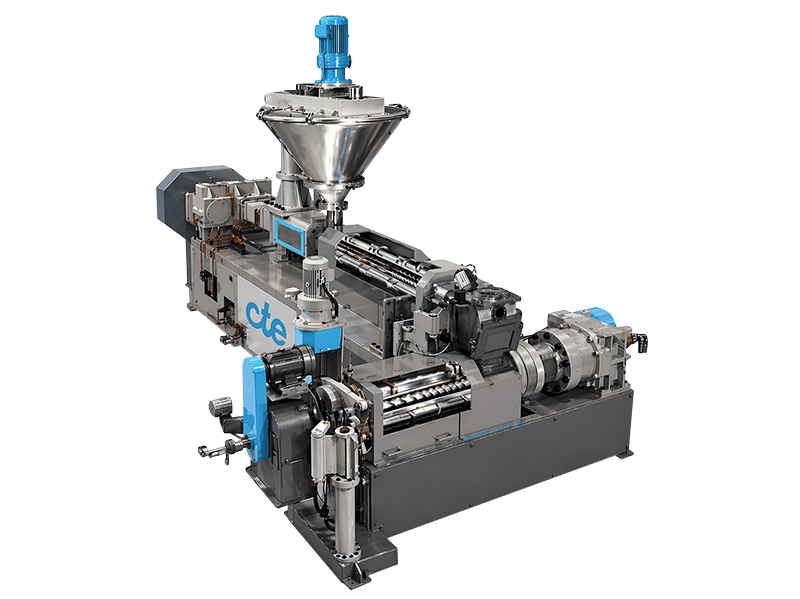
Plants evaluate CTE as a profit-improvement investment when they need to reduce operating losses, stabilize output, and improve product quality.
CTE extruders are well suited for high-filler compounds, recycling, PVC, biomass, and other materials that can push conventional co-rotating systems beyond their practical limits.
CTE reviews your material, process challenges, and production bottlenecks, discusses testing if needed, and recommends a machine concept that fits your line.
High shear heat forces more cooling and more utility use
In intermeshing, co-rotating systems, material is pushed through kneading discs under continuous high compression. That friction increases resin temperature quickly and makes thermal management expensive.
Lower-heat kneading supports lower resin temperature
CTE's rotor design repeats compression and release rather than trapping material in constant high compression. This controls heat generation and supports resin temperatures 10-20 C lower than conventional twin-screw systems.
Business impact:
lower cooling demand helps reduce energy cost
while protecting product quality.
Poor venting can create bubbles, defects, and unstable pellets
When gas cannot escape smoothly during compounding, pellets are more likely to contain air bubbles. Those defects can lead to quality issues, rejected lots, rework, and weaker downstream performance.
Non-intermeshing structure creates a stronger gas release path
Because the two screws do not intermesh, gas and air can escape through the gap between them and vent out smoothly. That is one reason CTE extruders are valued for recycling, high-filler compounding, and difficult feedstocks.
Business impact:
Can reduce pellet defects can improve yield,
customer quality confidence, and usable output.
Plants often slow screw speed to avoid degradation and feed-neck issues
When the process builds too much heat or gas backflow disturbs feeding, operators are forced to reduce speed or accept unstable production. That lowers usable output and limits factory growth.
Stable feeding and low-heat compounding support higher output
CTE combines strong degassing, efficient conveying, and lower heat generation. In comparison tests at 40 mm screw diameter, throughput volume was approximately double that of conventional intermeshing, co-rotating twin-screw extruders.
Business impact:
more stable throughput can improve plant
capacity without relying on overtime or additional lines.
CTE addresses three major cost drivers at once: energy load, reject risk, and throughput loss. That is why owners evaluate CTE as a profit-improvement investment, not just as a machine purchase.
CTE offers two strong routes depending on your material difficulty, output target, and line constraints.
A tandem configuration that combines a counter-rotating, non-intermeshing twin-screw kneading section with a large-diameter single-screw extrusion section for lower-temperature, lower-speed extrusion.
High-filler compounding, recycled pellet production, rigid PVC, biomass materials, production lines where degassing and heat control directly affect profitability.
A strong fit for plants that need higher throughput, better yield, and more stable quality when processing difficult formulations.
| Screw diameter | 38-120 mm |
|---|---|
| Max. screw speed | 450-800 rpm |
| Motor capacity | 37-650 kW |
Before inquiry: share your material recipe, target output, main defect, and current line limitation.
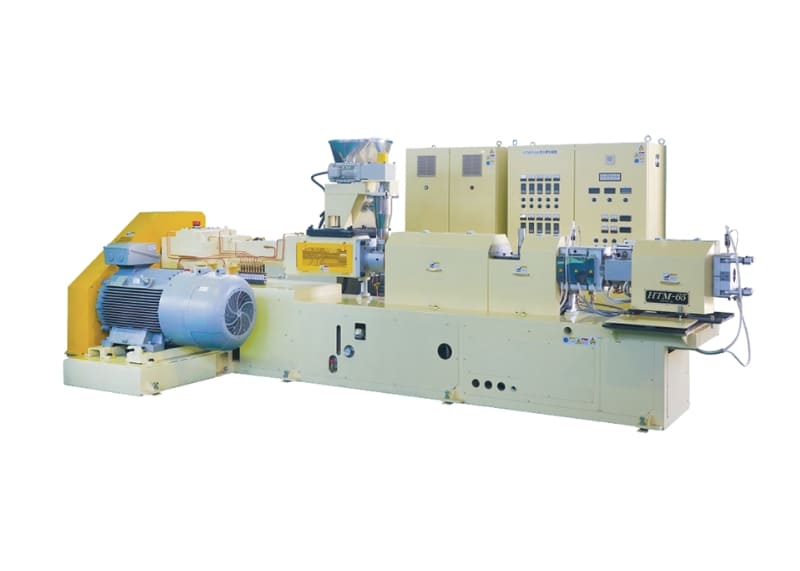
A strong option when you want CTE's patented kneading and degassing performance in a more compact and lower-cost system.
Wood flour compounding, biomass formulations, selected high-filler applications, and projects where footprint and investment efficiency matter.
Supports quality improvement and operating cost reduction without unnecessary over-specification.
| Screw diameter | 38-90 mm |
|---|---|
| Max. screw speed | 600-850 rpm |
| Motor capacity | 22-350 kW |
Before inquiry: share moisture condition, current pre-drying process, target pellet quality, and space constraints.
From the first discussion to testing, proposal, delivery, and follow-up, CTE works to reduce uncertainty before you commit.
Share your material, bottleneck, and target business outcome
CTE reviews process conditions, utilities, and target quality
Testing scope and evaluation points are aligned with your priorities
CTE can test your material to confirm dispersion, venting, and output
Receive feedback on throughput, quality, and process fit
Get a recommended machine concept and commercial discussion
Specifications, timeline, and installation assumptions are finalized
Maintenance, modification, and engineering support continue after launch
Incentive eligibility depends on the project type, industry, investment size, location, and approval status. Before making a final decision, confirm the latest requirements with local advisers and relevant authorities.
If your line struggles with recycled material, high filler loading, PVC, unstable output, or quality loss caused by heat and gas, CTE is worth a serious review before your next equipment decision.
Tell CTE about your material, current output, and production challenges.The team can review your process, discuss testing options, and advise whether HTM Tandem or HTM is the better fit for your line.
CTE does not take a one-price-fits-all approach. Pricing and ROI depend on your material formulation, filler loading, throughput target, utility conditions, plant layout, and required quality level.
After reviewing your process, CTE can discuss a suitable machine concept and the expected business impact from higher throughput, lower scrap, and reduced thermal load.
If possible, prepare the following information before contacting CTE:
Yes. CTE’s twin-screw technology is designed for applications such as high-filler compounding, recycled pellet production, rigid PVC, biomass materials, biodegradable resins, and other hard-to-process materials where degassing and heat control are critical.
CTE first reviews your process goals, material conditions, and major sources of production loss. The team can then discuss testing, machine fit, and proposal scope.
If testing is needed, CTE can evaluate your material and share the findings before you make a final equipment decision.
CTE’s counter-rotating, non-intermeshing design is engineered to improve gas venting, control shear heat, and support stable feeding when processing difficult compounds.
Delivery timing depends on model, customization level, testing requirements, and final specification. CTE will confirm a schedule after the required machine concept and project scope are defined.
CTE provides maintenance support, machine modifications, and engineering assistance. According to CTE’s service information, the company also supports imported equipment and can help optimize existing extrusion lines for better productivity.
Delivery timing depends on model, customization level, testing requirements, and final specification. CTE will confirm a schedule after the required machine concept and project scope are defined.
Depending on project structure and location, eligible investments may qualify for machinery duty relief, tax incentives, or zone-based benefits. Because rules can change, final confirmation should be made with the relevant local authorities and advisers.