Feed bottlenecks occurring with low bulk density raw materials
This site is operated by Zenken Corporation with CTE Corporation as a sponsor.
When processing raw materials with low bulk density in an extruderFeedneck challenges, problems with conventional extruders, and extruders that solve them.This section describes the following
What you will find on this page
Feed bottleneck issues that occur with low bulk density raw materials
Challenges of conventional extruders
Extruder that solves feed neck problems
One of the most troublesome phenomena when processing low bulk density materials in an extruder is "feed necking. This isThe air held in the material is not discharged sufficiently in the extruder, resulting in poor material penetration and clogging of the material in the extruder's material hopper.refers to
When feed bottlenecks occur, not only does the supply of raw materials become unstable, but it can also lead to serious problems such as lower throughput and variations in product quality. Solving this problem has become an unavoidable priority for manufacturing sites, especially as the demand for environmentally friendly and recycled materials increases.
Examples of materials with low bulk density
Recycled raw materials
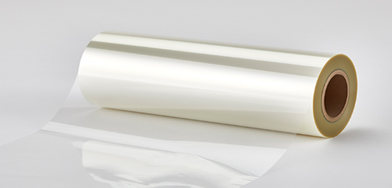
PET film
Various resin fiber crushed products
Crushed PET films and sheets, etc.
Inorganic filler
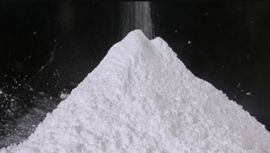
calcium carbonate (CaCO3) powdermica
fine talcum powder
calcium carbonate (CaCO3) powder
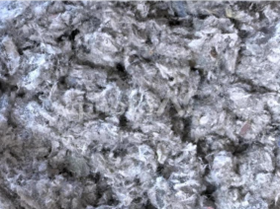
Mica, etc.
Organic filler
wood flourcellulose nanofiber
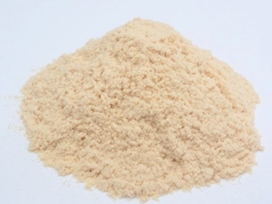
wood flour
cellulose fiber
Carbon fiber, etc.
Limitations of conventional twin-screw extruders
Conventional twin-screw extruders of the meshing and co-directional rotation type have a structural limitation: the two screws rotate in the same direction while meshing,Fatal drawback of almost no clearance between screws, blocking gas escape pathWe are having a
Furthermore, kneading discs used for kneading generate a large amount of heat because they continuously apply a strong shear force under high speed rotation and high compression conditions.
Since raw materials with lower bulk density contain more air, the kneading disc in such a structure blocks gas and air, causing them to flow back at the material supply section. As a result, stable continuous operation becomes difficult, resulting in a significant decrease in production efficiency.
Introducing an extruder with excellent degassing properties
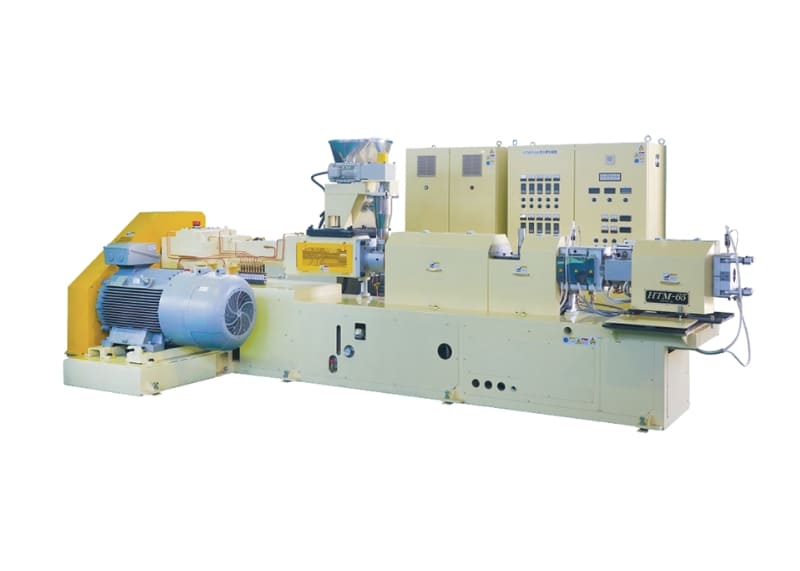
An innovative solution to these challenges is CTE's HTM twin-screw extruder. This equipment isUnique structure of "interdirectional rotation and non-intermeshing typeThe company has adopted the following
The most distinctive feature of the HTM is that the two screws do not engage each other but rotate in opposite directions. Since an adequate space is secured between the screws, gas can escape smoothly, resulting in excellent degassing performance.
In addition, since kneading is performed in the rotor element, instantaneous high shear is achieved, but shear and compression are immediately released, thus minimizing heat generation.
Furthermore, the rear vent system in the material feed section fundamentally prevents feed necks even with low bulk density materials. This structure improves the feed neck and enables a higher discharge rate compared to conventional extruders.
Extruder problems solved by the HTM twin-screw extruder
It is not only the feed-neck phenomenon that HTM solves.The following problems are likely to occur in the extrusion processThe system can also be used for
Resin degradation
HTM tandem extruders areStructure that effectively suppresses shear heating in the kneading section and enables independent temperature control in the subsequent single-axis extrusion sectionThe temperature of the machine is set at a low level. This feature allows for both excellent dispersion and high output while maintaining a low actual operating temperature.
The tandem configuration also allows independent control of the speed of the single-shaft section, enabling extrusion at lower temperatures and lower shear, making it ideal for processing heat-sensitive biomass resins and biodegradable resins.
Key Points to Control Resin Deterioration
Kneading by Rotor
Kneading with a rotor causes instantaneous compression and shear, followed by release and repetition of the process, resulting in low heat generation.
tandem-type
Since the single-shaft section is independent, the temperature and screw speed can be lowered, thereby reducing shear heating in the extrusion section.
dispersion failure
Unique kneading mechanism created by non-intermeshing structureis also powerful for uniform dispersion of filler. Instantaneous high shear by the rotor element and repetitive compression and release result in high shear force but low heat generation.
Even fine filler powder that tends to agglomerate can be dispersed efficiently. This makes it possible to produce compounds with excellent physical properties even with highly concentrated filler blends.
summary
The feed-neck phenomenon is a major issue for raw materials with small bulk density. This problem is not just a feeding trouble, but an important issue that directly affects productivity and quality.
C-TE's HTM twin-screw extruder provides a solution to this challenge through its innovative design of interdirectional rotation and non-intermeshing structure.Superior degassing performance prevents feed necks, while at the same time inhibiting resin degradation and improving dispersion..
If you feel the limitations of conventional machines, why not consider introducing HTM? We also accept free introduction tests, so please feel free to consult us using the form below.